
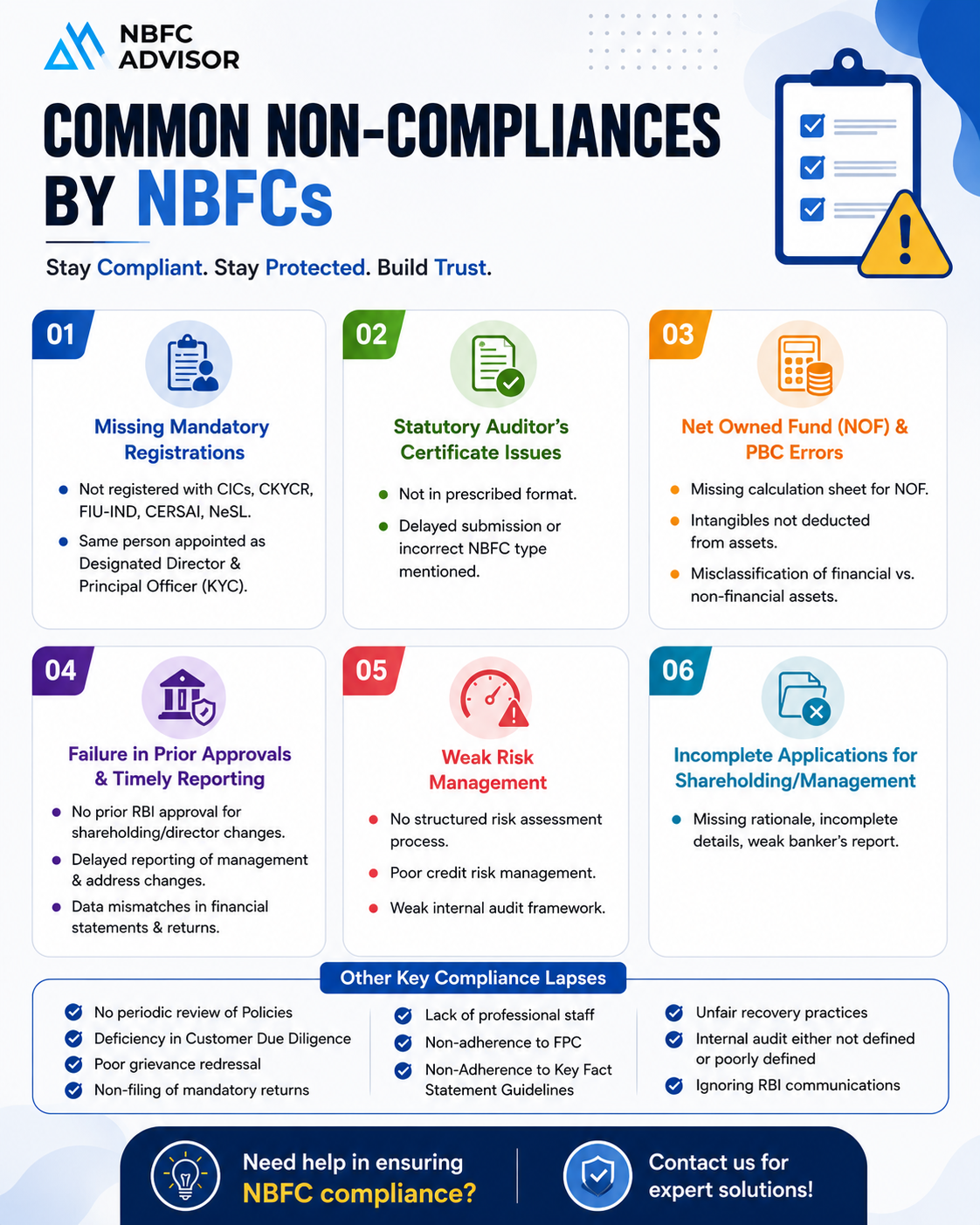
Compliance is the backbone of every Non-Banking Financial Company (NBFC) in India. However, many NBFCs face regulatory challenges due to common mistakes and oversight in compliance practices. This blog highlights the most frequent non-compliances observed in NBFCs and provides practical insights on how to address them effectively while adhering to the guidelines of the Reserve Bank of India.
One of the most common issues is missing mandatory registrations, where NBFCs fail to register with key platforms such as CICs, CKYCR, FIU-IND, or CERSAI. Additionally, improper role allocation, such as appointing the same person for multiple compliance-sensitive positions, can lead to regulatory concerns.
Another critical area is statutory audit compliance, where delays in submission, incorrect formats, or misclassification of NBFC categories can result in penalties or scrutiny. Proper documentation and timely filings are essential to maintain regulatory credibility.
The blog also focuses on Net Owned Fund (NOF) and Principal Business Criteria (PBC) errors, including incorrect calculations, failure to deduct intangible assets, and misclassification of assets. These errors directly impact the financial integrity and regulatory status of the NBFC.
A major compliance gap is seen in failure to obtain prior approvals and timely reporting, especially in cases of change in shareholding, directors, or management. Delays in reporting or inconsistencies in financial returns can raise red flags with regulators.
Additionally, weak risk management frameworks pose a significant risk. Many NBFCs lack structured risk assessment processes, robust credit risk management systems, and effective internal audit mechanisms, which can lead to operational and financial vulnerabilities.
The blog also highlights incomplete applications and documentation issues, where missing details, weak justifications, or incomplete reports can delay approvals and impact business operations.
Other Key Compliance Lapses Include:
- Lack of periodic policy reviews
- Weak customer due diligence (CDD) processes
- Poor grievance redressal mechanisms
- Non-filing or delayed filing of mandatory returns
- Non-adherence to Fair Practices Code (FPC)
- Ignoring Key Fact Statement guidelines
- Unfair recovery practices and weak internal controls
Key Services Covered:
- NBFC Compliance Audit & Gap Analysis
- RBI Compliance & Regulatory Advisory
- Policy Drafting & Governance Framework Setup
- Risk Management & Internal Audit Systems
- KYC/AML Compliance Implementation
- Filing & Reporting Support
This blog emphasizes that compliance is not just about avoiding penalties—it is about building trust, ensuring operational stability, and strengthening long-term growth. With the right advisory and structured compliance approach, NBFCs can proactively identify risks, streamline operations, and stay fully aligned with regulatory expectations.
Overall, this blog serves as a practical guide for NBFCs to understand common compliance pitfalls and take corrective actions, ensuring a secure, compliant, and sustainable financial business.