
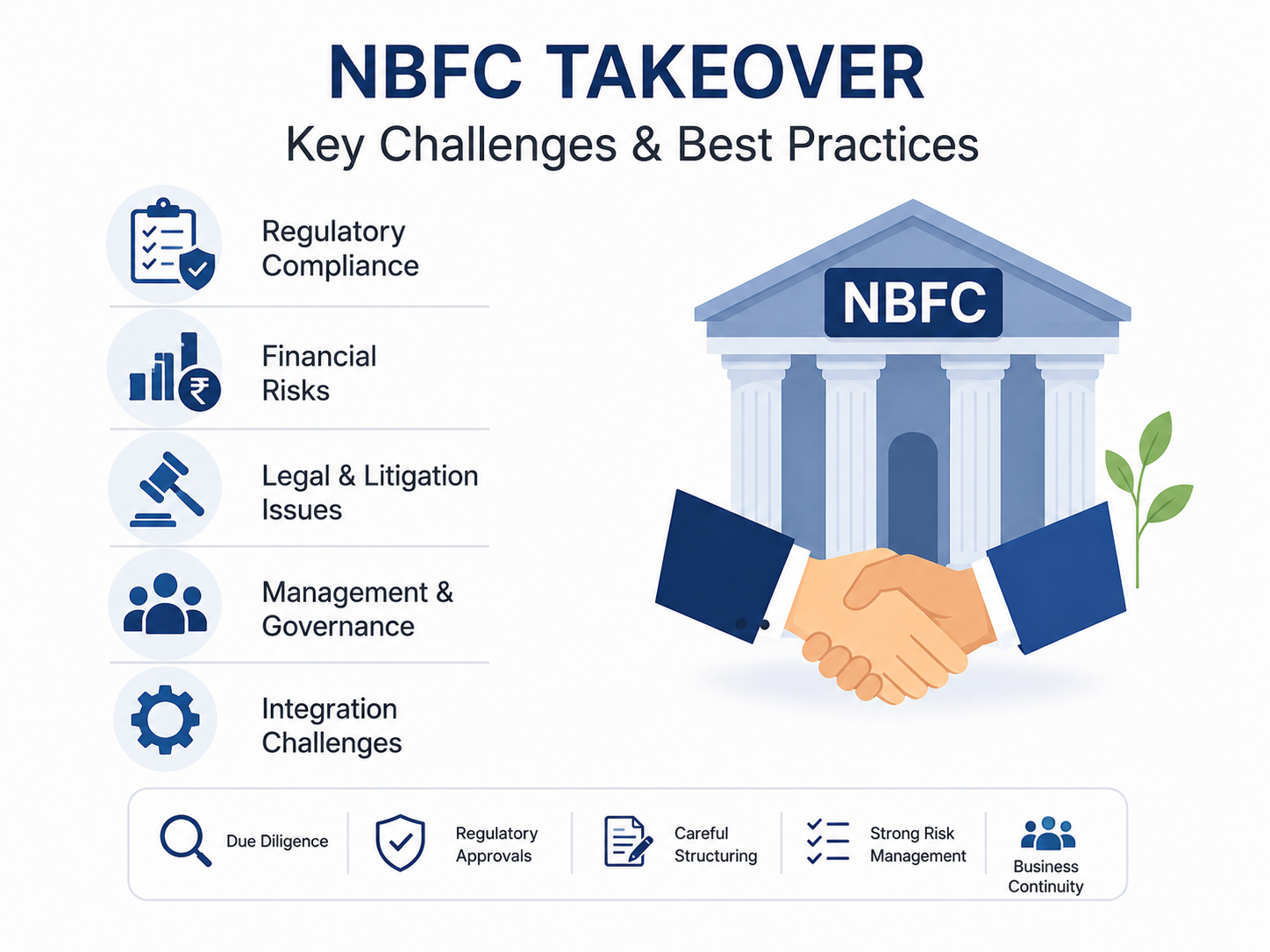
Key Challenges and Best Practices in NBFC Takeover
Taking over a Non-Banking Financial Company (NBFC) can provide a strategic opportunity to enter or expand in the financial services sector. However, the process involves significant regulatory, financial, legal, and operational challenges. Careful planning and due diligence are essential for a successful transition.
Key Challenges in an NBFC Takeover
1. Regulatory Compliance
NBFCs operate under the regulatory framework of the Reserve Bank of India (RBI). Changes in ownership, control, or management may require specific approvals and filings. Failure to comply can delay or complicate the transaction.
2. Financial and Loan Portfolio Risks
The quality of the NBFC's loan portfolio is critical. Hidden liabilities, stressed assets, overdue loans, inadequate provisioning, or high borrower concentration can significantly affect the value of the acquisition.
3. Legal and Litigation Issues
Pending litigation, regulatory notices, contractual obligations, guarantees, and disputes may create unexpected liabilities for the new owners.
4. Management and Governance
Replacing directors or senior management can create operational and regulatory challenges. The new management must also understand the NBFC's existing policies, controls, customers, and regulatory responsibilities.
5. Integration Challenges
After acquisition, integrating technology, employees, internal controls, risk-management systems, and business processes can require considerable time and investment.
Best Practices for a Successful Takeover
Conduct Comprehensive Due Diligence
Review the target NBFC's financial statements, loan portfolio, regulatory compliance, legal matters, tax position, ownership structure, governance, and operations before committing to the acquisition.
Plan Regulatory Approvals Early
Identify all applicable RBI and corporate approvals at the beginning of the transaction. Building regulatory requirements into the transaction timeline can help prevent unnecessary delays.
Structure the Transaction Carefully
Clearly define the proposed ownership, control, consideration, conditions precedent, warranties, indemnities, and post-closing obligations in the transaction documents.
Strengthen Risk Management
Following the takeover, review the NBFC's internal controls, credit policies, compliance systems, cybersecurity, customer processes, and risk-management framework.
Maintain Business Continuity
A takeover should be managed without unnecessarily disrupting customers, employees, lenders, and other stakeholders. A structured transition plan can help maintain operational stability.
Conclusion
An NBFC takeover can be successful when regulatory compliance, financial risks, legal obligations, and operational integration are addressed systematically. Thorough due diligence, early regulatory planning, careful transaction structuring, and strong post-acquisition governance are among the key practices that can help reduce risks and support a smooth transition.
Disclaimer: This article is for general informational purposes only and does not constitute legal, financial, tax, or regulatory advice. NBFC takeover requirements may vary depending on the entity and transaction structure. Professional advice should be obtained before proceeding with an acquisition.